
The “5-Star Graveyard Effect”
Five-star ratings once carried authority in Texas.
A water damage restoration contractor in Fort Worth built a strong review profile over several years.
Reputation looked solid at a glance.
Star averages stayed high.
Confidence in past performance replaced ongoing effort.
Time passed without new reviews.
Activity slowed across feedback channels.
Recent jobs closed without a structured review collection.
Profile freshness declined week by week.
Trust signals stopped evolving.
🔷 SECTION 6 — SIGNAL / RECENCY FAILURES
(6-1 → 6-5)
6-1 The “3-Year Leader → Page 2 Collapse”
6-2 The “Map Pack Disappearance After Busy Season”
6-3 The “Dormant Winter Profile Reset”
6-4 The “5-Star Graveyard Effect”
6-5 The “Invisible but Not Suspended” Profile
Competitors in Austin increased review velocity.
Nearby operators in San Antonio requested feedback after every completed job.
Firms in Kansas City and Columbus built steady pipelines of new reviews.
Search platforms compared activity patterns across profiles.
The “5-Star Graveyard Effect”
👉 This was a trust signal stagnation failure
🔧 System Layer
Primary System:
→ Trust Velocity Failure
Breakdown:
- Input failure: no new reviews
- Algorithm response: stale trust signal
- Output: lower visibility + weaker CTR
Secondary Systems:
- Perception System Failure (appears inactive)
- Competitive Trust Override (others look more “in demand”)

Trust Velocity Decay and Click Behavior Shift
An input failure occurred in the feedback layer.
New reviews stopped entering the system.
Collection processes were inconsistent or absent.
Interpretation of customer sentiment stalled.
System behavior reflected stagnation.
Trust velocity declined as review flow stopped.
Perceived demand weakened due to inactivity.
Relevance signals a loss of alignment with active competitors.
Platform response adjusted visibility weighting.
Listings with fresh reviews gained prominence.
Older profiles appeared less active.
Click-through rates declined as users favored recent feedback.
The output consequence extended beyond ranking.
Visibility decreased gradually.
Lead quality shifted toward price-sensitive inquiries.
Conversion rates declined as perceived demand decreased.
Margin pressure increased as trust weakened.
Primary System: Feedback System Failure
Input failure: no new reviews
System behavior: trust velocity decay reduces perceived demand
Platform response: stale trust signals lower visibility weighting
Output consequence: reduced visibility and weaker CTR
Secondary System Interaction: Reputation System
Velocity stalled across review channels.
Defense weakened without fresh validation.
Control shifted toward competitors with active feedback loops.
Secondary System Interaction: Signal System
Freshness signals declined alongside review stagnation.
Continuity gaps amplified the perception of inactivity.
Decay patterns reinforced ranking displacement.
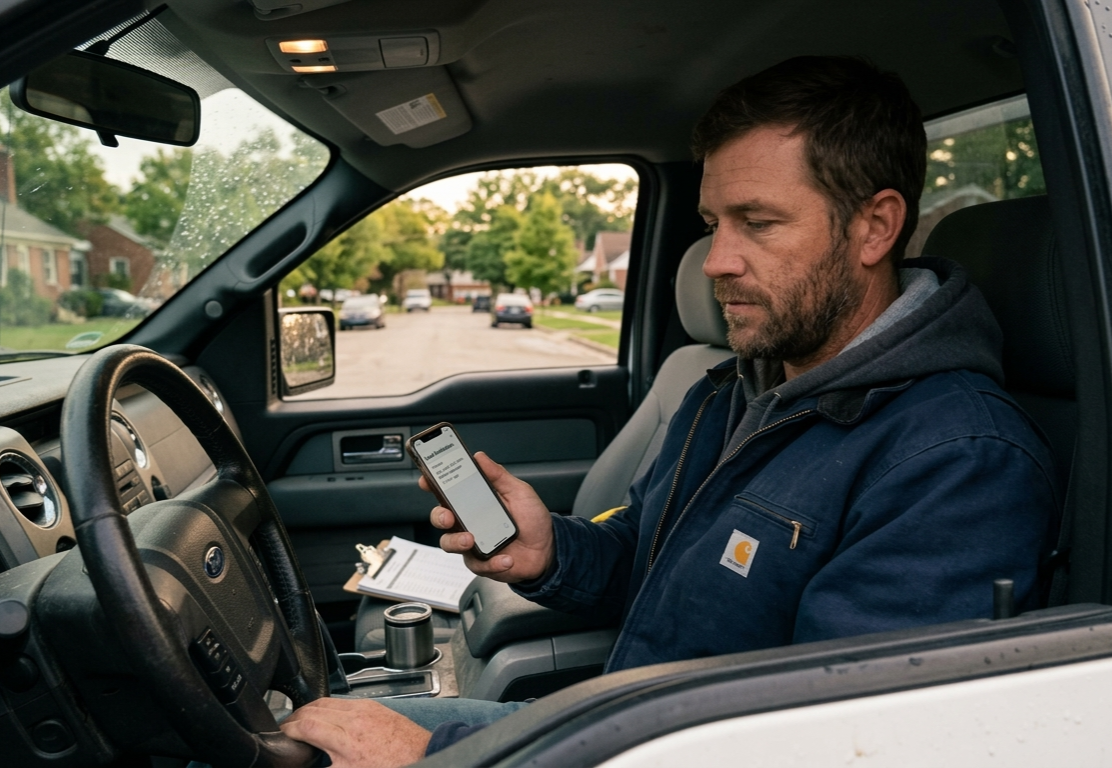
Decision Distortion Around Reviews and Reputation
Contractors misinterpret strong star ratings.
Many believe high averages are sufficient.
Some assume past reviews carry forward indefinitely.
Others delay review requests to avoid customer friction.
Actual system drivers operate differently.
Trust velocity determines ongoing perception.
Entity strength requires continuous validation.
Conversion pathways depend on visible demand signals.
False decisions create compounding effects.
Focus shifts toward ads instead of feedback collection.
Website updates ignore trust stagnation.
Agency changes fail to address gaps in review velocity.
Where Contractors Let Trust Systems Collapse
Reputation gets treated as a static asset.
Feedback systems remain underdeveloped.
Collection processes lack consistency.
Signal continuity breaks at the trust layer.
Competition density accelerates trust displacement.
Platform control rewards recent validation.
Algorithm volatility amplifies inactivity signals.
Weak enforcement of standards allows aggressive competitors to dominate perceptions.
A Dallas contractor experienced declining click rates despite strong ratings.
Another firm in Indianapolis restored performance only after rebuilding review velocity.

The “5-Star Graveyard Effect”
System behavior determines outcome.
Delayed decay appears sudden when leads drop.
Visibility loss creates lead instability.
Lead instability increases pricing pressure.
Margin compression limits growth potential.
Advanced AI Marketing for Contractors approaches trust as a living system.
Feedback loops remain active across all job cycles.
Signal continuity supports ongoing perception strength.
Platform alignment adapts to evolving review patterns.
Fewer choices reduce execution errors.
More options increase risk exposure.
Professionals maintain trust velocity continuously.
Most contractors rely on past reviews long after systems stop producing them.